Field notes: three watch floors, three calls on the same excavation
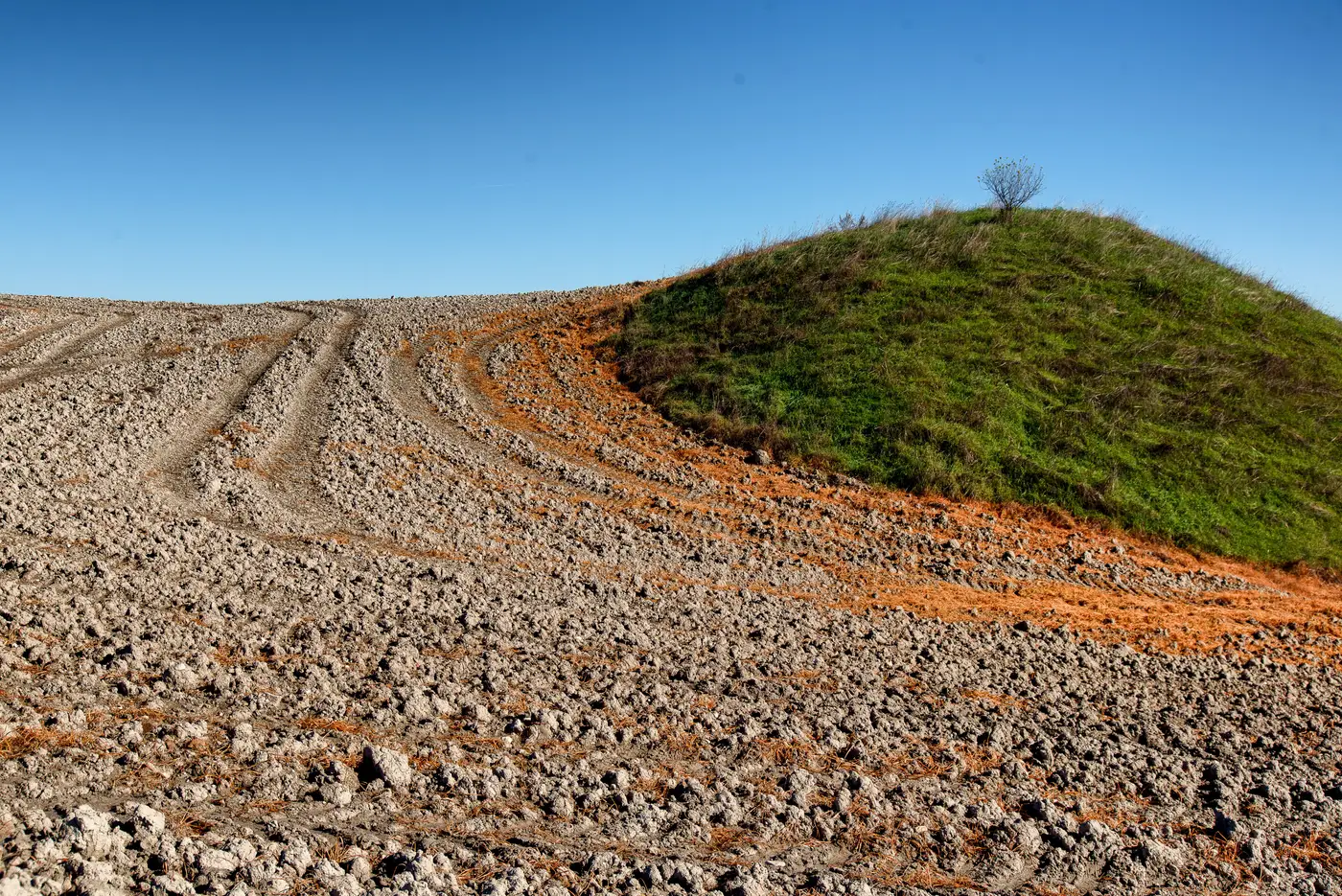
Three analysts, three shops, one collect. Same day, same site, same pixel. By the end of the week we had three different words in three different reports: excavation, grading, and foundation prep, the last one causing most of the argument.
This happens every winter and it's worth writing down why, because the imagery didn't change. The ground did, and the sun did, and that's most of the problem.
Low sun angle in December throws long shadows off anything with relief. A spoil pile that reads as a soft gray mound in July casts a shadow in January long enough to look like a trench wall. One of the three floors called it a cut-and-cover excavation based on that shadow geometry alone, and on a flat summer pass they'd probably have been right to trust it. In winter the same shadow can belong to a berm, a stack of conex boxes, or a snowdrift against a retaining wall. The geometry lies.
Then there's snow cover doing the opposite job: hiding instead of exaggerating. A dusting on bare soil flattens the tonal contrast between disturbed earth and undisturbed ground that a VHR optical pass depends on to separate "something happened here" from "nothing happened here." The second floor's read called the same feature grading, mostly because the spoil wasn't legible enough through a thin snow layer to call it anything sharper. Reasonable call, wrong reason: they were reading a tonal cue that winter had partly erased, not the actual volume of earth moved.
The third call, foundation prep, came closest, and it came from someone who'd pulled the prior week's frame and lined it up against this one before writing anything down. That's the part that matters more than any of the shadow or snow physics. Two of the three floors were reading a single frame in isolation. The one that got closest was comparing frames.
That's the quiet lesson in every version of this story: a single pass tells you what a patch of ground looks like today. It takes a second pass, lined up against the first, to tell you whether the ground moved. Shadow artifacts and snow glare are real failure modes, but they're failure modes that mostly only bite you when you're reading one image cold instead of reading a change.
None of this is really an argument for better eyes on the screen. It's an argument for fewer frames to eyeball and align by hand in the first place, because the archive-comparison step is exactly where a tired analyst starts trusting a shadow. A site that gets a consistent weekly pass, with the prior week already registered against the current one and the actual delta called out, doesn't leave room for three people to argue about whether a shadow is a trench. That's the gap Facility Expansion is built to sit in: a weekly watch on a named site that flags the construction, excavation, and hardening changes directly rather than handing an analyst two raw frames and a prayer that the lighting cooperates.
It won't settle every edge case. Snow is still snow, and a fresh cut under four inches of powder is going to be a hard call for anyone, human or otherwise. But most of the disagreement in that December report wasn't about a genuinely ambiguous feature. It was about three people doing manual comparison under different light with different patience for it, and getting three different stories out of the same ground.
Worth a look before next winter's sun angle does it to you again.